Married or in a Civil Partnership? Tax Planning Opportunities You May Be Overlooking
Marriage or civil partnership does not combine two people into a single taxpayer. Each partner generally retains an individual tax position, allowances, accounts and obligations. However, the legal relationship can create opportunities and exemptions that do not apply in the same way to unmarried couples. Looking at income, savings, investments, pensions, property ownership and estate plans together can reveal areas worth checking. That does not mean every available allowance must be used or that assets should be moved simply because a different tax treatment may be available. Using an allowance can be useful, but tax should not be the only reason for changing how money, investments or assets are held. Any arrangement should also fit the couple’s objectives, access needs, ownership intentions and wider financial plan. Important information: This article is for general information only and does not constitute personal financial, tax or legal advice. Tax rules, allowances and reliefs can change, and their effect depends on individual circumstances. Before transferring assets, changing ownership, making pension contributions or altering estate plans, consider taking appropriate regulated financial, tax and legal advice based on your circumstances.
Could Marriage Allowance Apply?
Marriage Allowance may let a lower-earning spouse or civil partner transfer part of their unused Personal Allowance to the other partner. Under current GOV.UK guidance, the transferable amount is £1,260, representing 10 percent of the Personal Allowance.
The lower-earning partner will generally need income below their Personal Allowance. The receiving partner will generally need to pay Income Tax at the basic rate. The detailed eligibility rules, including the treatment of Scottish taxpayers and other income, should be checked against current GOV.UK guidance.
Marriage Allowance may reduce a couple’s overall Income Tax bill where the eligibility conditions are met. It is not available to every married couple or civil partnership. It is also distinct from Married Couple’s Allowance, which applies in different circumstances. Current eligibility should be checked rather than assuming that marriage itself creates an entitlement.
What Happens When Assets Are Transferred Between Partners?
Where spouses or civil partners are living together, transfers of assets between them can generally be made on a no-gain/no-loss basis for Capital Gains Tax. This usually means that the transfer itself does not create an immediate taxable gain or allowable loss.
This treatment can defer rather than remove a potential Capital Gains Tax liability. The receiving spouse or civil partner will generally be treated as acquiring the asset at the transferring partner’s original acquisition cost, so its history remains relevant if it is later sold.
The rules can differ where a couple is separated, divorcing or dissolving a civil partnership. Tax is only one consideration: legal ownership, control, access to income or capital, creditor exposure, relationship circumstances and estate intentions can all matter. A transfer should not be described as universally tax-free or assumed to remove future Capital Gains Tax.
Can a Couple Make Use of Two ISA Allowances?
Each adult has an individual ISA allowance. A married couple or civil partnership may therefore have two separate allowances available, but the allowances cannot be merged and the ISAs remain individually owned accounts.
Couples may wish to review whether each person’s own ISA allowance is relevant to their circumstances. That does not mean both allowances need to be used each tax year, or that tax efficiency should override access and investment needs.
Moving money between partners and subscribing it to separate ISAs are distinct steps. Ownership intentions, emergency reserves, investment risk, time horizon and each partner’s need for financial independence should be considered before changing how savings are held.
What Is an Additional Permitted Subscription?
Additional Permitted Subscription, or APS, is an additional ISA subscription allowance that may be available to a surviving spouse or civil partner after their partner dies. It is separate from the survivor’s normal annual ISA allowance.
The additional amount is linked to the deceased partner’s ISA holdings and is subject to rules on eligibility, valuation, providers, deadlines and the type of subscription. It should not be treated as automatic, unlimited or available in every situation.
Additional Permitted Subscription may allow a surviving spouse or civil partner to retain more money within the ISA system after bereavement. The rules are technical, so the relevant ISA provider and current HMRC guidance should be checked before acting.
Can Pension Contributions Be Made for a Spouse?
Making pension contributions for a spouse or civil partner may be possible, including where they have limited or no earnings. However, the amount that can receive tax relief, the annual allowance position and the terms of the pension arrangement should be checked before a contribution is made.
Relevant earnings, contribution limits, annual allowance rules, other pension saving and the way the pension provider claims tax relief can all affect the outcome. Tax relief should not be assumed simply because a couple is married, or because one person provides the money for the contribution.
Affordability and access matter too. Pension money is generally intended for retirement and is subject to minimum access-age rules. A pension contribution is not automatically more appropriate than retaining accessible cash, using an ISA or meeting other household priorities.
How Does Inheritance Tax Work Between Spouses and Civil Partners?
Transfers between spouses and civil partners are generally exempt from Inheritance Tax, subject to the relevant rules. Where conditions are met, an unused proportion of the first person’s nil-rate band may be available to transfer for use against the survivor’s estate on death.
The residence nil-rate band and its transferable element may also be relevant in some cases, but eligibility is complex. Domicile, wills, property ownership, beneficiary arrangements, trusts and the nature of the assets can affect the position.
Spouse and civil-partner exemptions can be an important part of estate planning, but they do not remove the need to consider the likely Inheritance Tax position on the second death. No fixed tax-free inheritance should be assumed without current, personal calculations.
What Is Expected to Change for Pensions From April 2027?
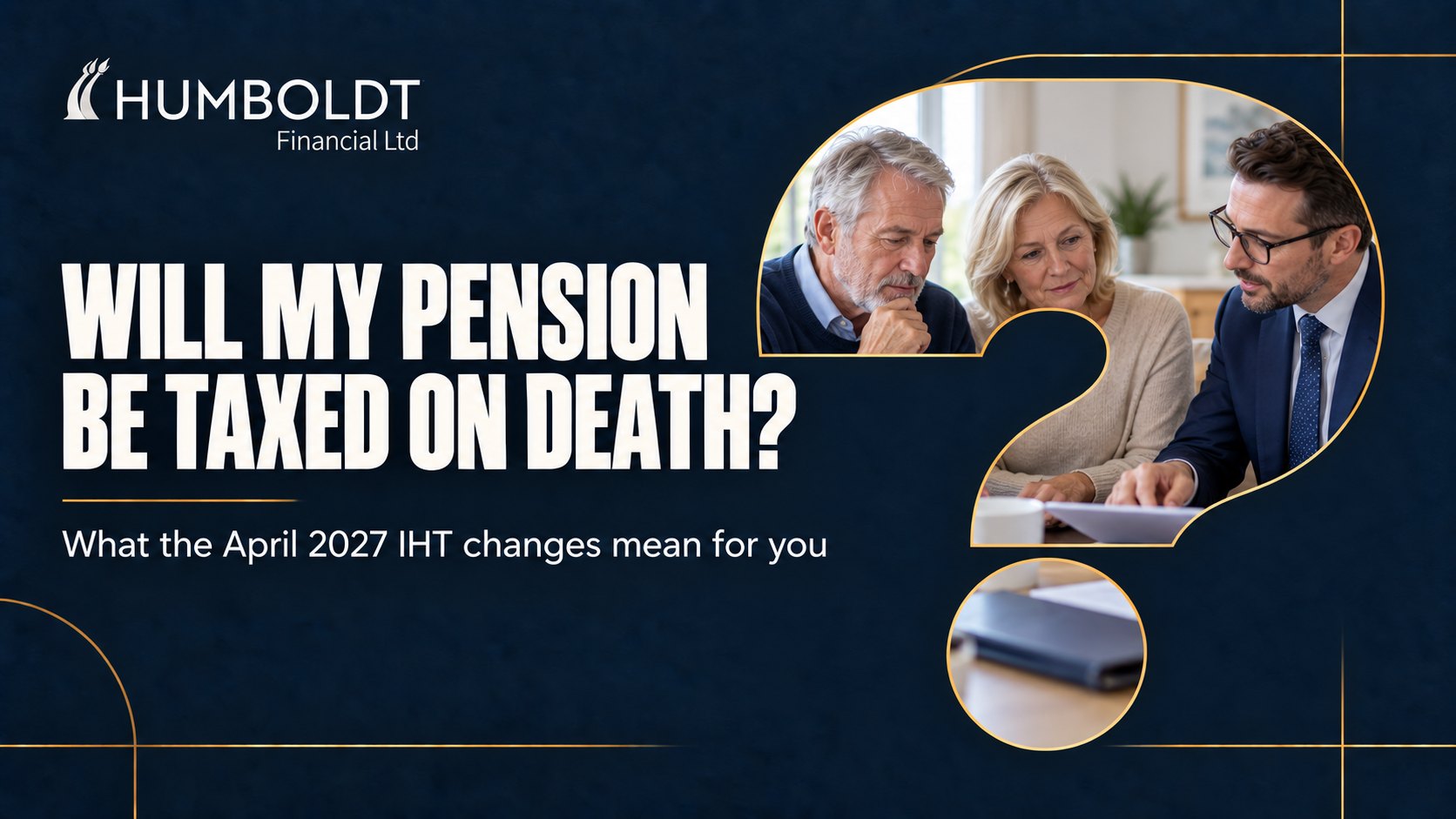
HMRC has announced a measure under which, for deaths on or after 6 April 2027, most unused pension funds and pension death benefits are expected to be brought within the value of a deceased person’s estate for Inheritance Tax purposes. Couples who have treated pensions as part of an inheritance strategy may wish to review their planning against the rules and figures that apply to them.
This does not mean that every pension death benefit will create an Inheritance Tax charge. The position may depend on the value of the estate, the type of pension arrangement, beneficiaries, nominations, wills, available exemptions and the detailed legislation in force at the time.
HMRC’s published policy material indicates that death-in-service benefits payable from a registered pension scheme are intended to be excluded from the estate under this measure. As the change is planned and implementation detail can develop, it should be rechecked immediately before publication and before any action is taken.
Why Should Couples Review the Household Picture?
Tax allowances sit within a wider household plan. Relevant information can include current and expected income, savings and ISAs, investment holdings, pension contributions, retirement income needs, property ownership, borrowing, wills, nominations and intended beneficiaries.
Access and resilience matter as much as tax treatment. Couples may wish to consider whether each partner retains suitable access to money and what could happen if one person becomes ill, dies, loses capacity or the relationship ends.
Ownership changes should make practical and legal sense, not simply reduce a tax bill. Where legal rights, wills, trusts or property ownership are involved, appropriate legal and tax input may be needed alongside regulated financial advice.
Couples’ Tax Planning Review
| Area | Information to Check | Important Limitation |
|---|---|---|
| Income | Each partner’s income and tax band | Marriage Allowance has eligibility conditions |
| Investments | Ownership and original acquisition costs | No-gain/no-loss treatment may defer CGT |
| ISAs | Each person’s subscriptions and access needs | Allowances and accounts remain individual |
| Pensions | Earnings, contributions, allowances and access | Tax relief and suitability cannot be assumed |
| Estate plans | Wills, nominations, property and beneficiaries | Spouse exemptions do not settle the second-death position |
| April 2027 change | Pension death benefits and total estate | Final legislation and current guidance must be checked |
Frequently Asked Questions
Do married couples have a joint tax allowance?
Generally, no. Each partner retains an individual tax position. Marriage Allowance may permit a limited transfer of unused Personal Allowance where current eligibility conditions are met.
Are transfers between spouses always tax-free?
No. A transfer between spouses or civil partners living together can generally receive no-gain/no-loss CGT treatment, but this may defer rather than remove a future liability. Other legal and tax consequences can also apply.
Can spouses combine their ISA allowances?
No. Each adult has an individual allowance and individually owned ISA accounts. Couples can review the use of both allowances, but they cannot merge them into one joint allowance.
Will every pension be subject to Inheritance Tax from April 2027?
No. HMRC has announced a measure under which most unused pension funds and pension death benefits are expected to be brought within estate valuation for Inheritance Tax from 6 April 2027. Whether there is an Inheritance Tax liability will depend on the law in force at the time, available exemptions and the individual estate.
Review how the pieces fit together
If you would like to understand how tax, pensions, savings and estate planning interact within your wider financial plan, consider taking regulated financial advice based on your own circumstances.
Discuss planning as a coupleSources
- GOV.UK: Marriage Allowance – Eligibility and the current transferable Personal Allowance amount.
- HMRC: HS281 Capital Gains Tax – civil partners and spouses (2026) – Current official guidance on no-gain/no-loss transfers and separation.
- GOV.UK: Individual Savings Accounts – Official overview of individual ISA allowances and account rules.
- HMRC: Additional Permitted Subscriptions – Official APS eligibility, valuation and administration guidance.
- GOV.UK: Pension tax relief – Official overview of pension contribution tax relief and limits.
- GOV.UK: Transfer an Inheritance Tax threshold – Official guidance on transferring an unused basic threshold.
- HMRC: Inheritance Tax – unused pension funds and death benefits – Policy paper for the measure taking effect for deaths on or after 6 April 2027.
Final considerations
Effective planning for a married couple or civil partnership is not simply about using every available tax allowance. It is about ensuring that ownership, access, investment risk, retirement plans and estate intentions work together. Before making a change, gather current statements, ownership records, acquisition costs, contribution details, wills and beneficiary nominations.
Personal circumstances matter: tax efficiency should not be the sole reason for changing asset ownership, using savings, making pension contributions or altering an estate plan. Any decision should reflect the couple’s objectives, legal rights, access needs, investment risk, tax position and wider financial circumstances.